The Most Important Thing You Will Do Today
Chang Park | OCT 3, 2024
The Most Important Thing You Will Do Today
Chang Park | OCT 3, 2024
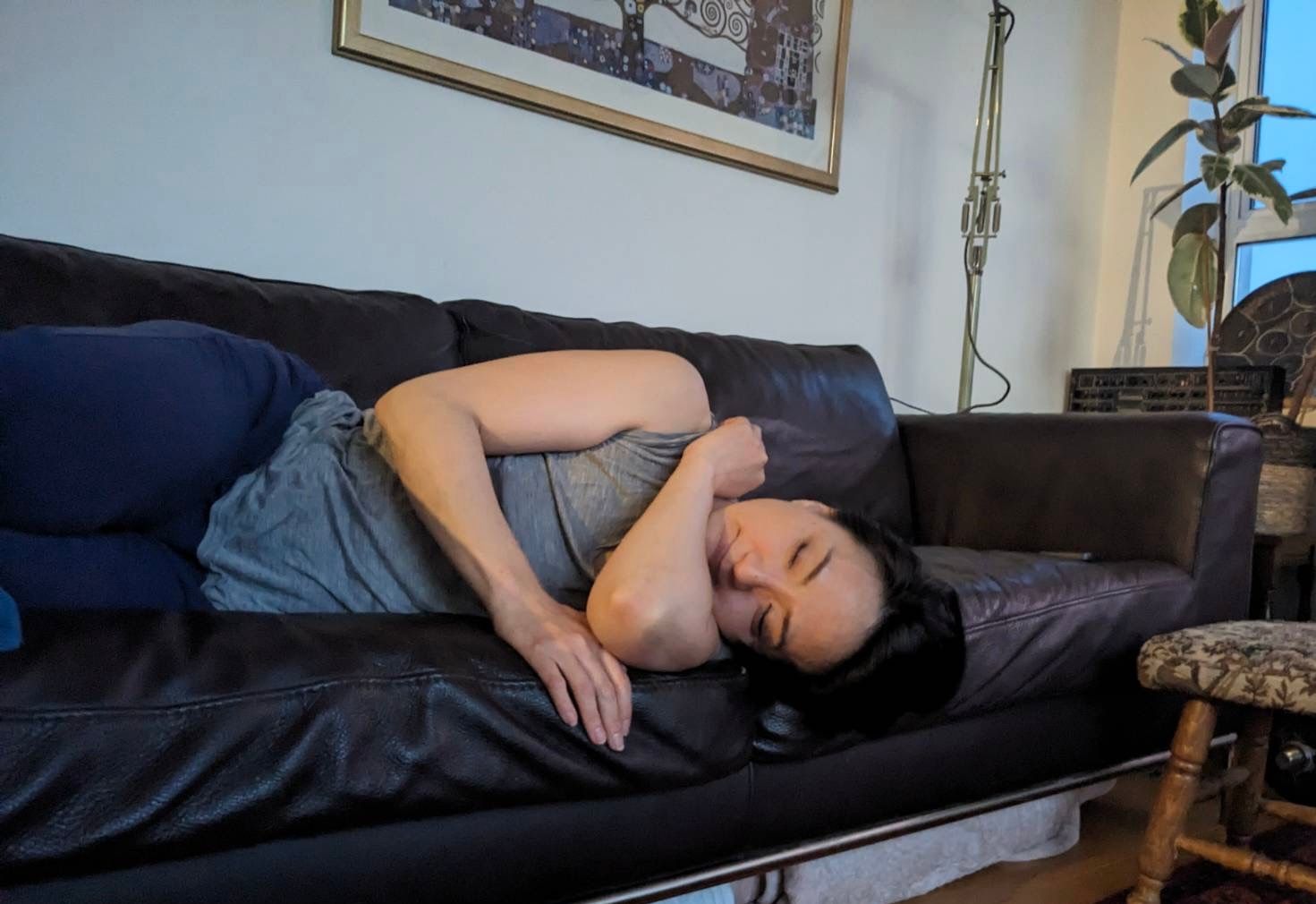
Did you guess it?
It’s SLEEP, the cornerstone of your health and well-being!!! 💤
Here I am, caught on camera recently having zonked out after dinner one evening.
Feeling the deleterious effects of a single night of poor sleep (self-inflicted, mind 😵💫), I’m thinking about the one in ten people with insomnia and many others (most?) who could benefit from improving their sleep.
According to experts, we are poor judges of our own sleep—evaluating both the quantity and quality. Unfortunately, many of us are used to nonrestorative sleep or even chronic sleep deprivation and are unaware of its impact on our health.
Sleep, the Foundational Pillar
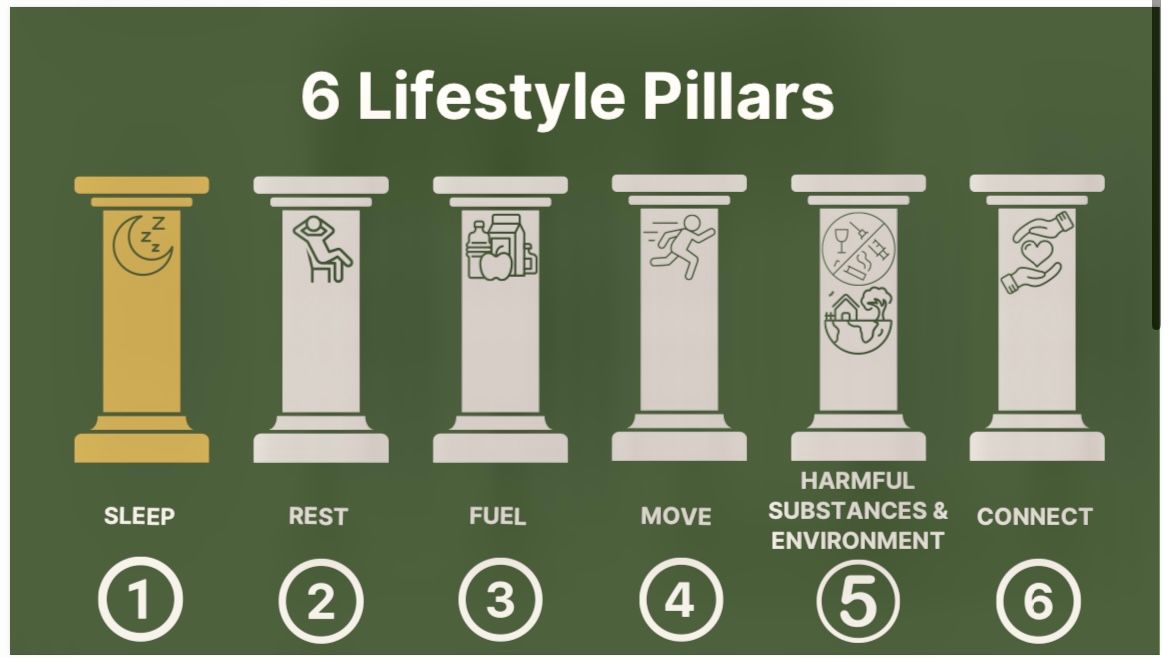
I’ve borrowed a nice graphic created by one of our health coaches. It shows how sleep is arguably the most critical lifestyle pillar—the base upon which all health thrives or dies.
After breathing, sleeping is the second non-negotiable and one of the most important things you do for your health every day.
Deprived of sleep for a few days, we would quickly die. Deprived of good quality sleep over a long period might contribute to early death or at least an uncomfortable life. Disordered sleep is associated with significant health issues, including cardiovascular disease, diabetes, mental health and dementia.
Sleep assists every single brain and bodily function without exception. It is nature’s great restorer, repairer, processor and protector. Our hormonal, metabolic, nervous and immune systems all rely on sleep. As Matthew Walker, sleep expert and Professor of Neuroscience, said, “When we fight our nature, we normally lose. How do we know? We find out in the form of illness, disease and impairment.”
Fighting biology is easy in modern life. Stress, devices, substances, and an increasingly sedentary lifestyle contribute to dysfunctional sleep cycles that are desperate to be restored.
How can we work with nature instead of against it?
Sleep Well *
Camomile tea, earplugs, or a weighted blanket—I’m sure you’ve heard many tips about getting better sleep.
I’ve five more simple tips that I like...

☀️ See the light of day
For sleep, did you know that what you do during the day matters maybe even more than what you do at night? Allowing the eyes to take in the morning light is crucial, even on darker winter days, since light is the most influential controller of our sleep cycle. Going outside for 20 minutes or even sitting by a window might help. Combining light with exercise is even better.
⏰ Timing is everything
The body clock thrives on consistency. If bedtime can’t always be regular, keep the same daily waking time as consistently as possible.
I’ll admit, I had a massive lie-in after my all-nighter - I slept all day. But, predictably, it messed up my sleep cycle for the rest of the week. We think we’re doing ourselves a favour by compensating and making up for sleep debt, but doing this all the time is detrimental overall.
% 80/20 Principle
So, having just said we have to be consistent, I will now justify my all-nighter! Rules are meant to be broken 😂
No, seriously - flexibility is important. Routine is fantastic, but uncompromising rigidity isn’t real life. Naps and lie-ins aren’t all bad; they are lovely sometimes! Our bodies are excellent at adapting to exceptional stressors, just not forever.
🌡️ Be Cool
Natural temperature fluctuations occur alongside our circadian cycle. Manipulating temperature is surprisingly powerful. Warming the peripheries (a hot bath) and cooling our environment (cold room) help to evoke a reduction in core body temperature that signals it’s time to zzz.
🛬 Smooth landing
Matthew Walker provides a helpful analogy for a wind-down routine: you wouldn’t want to land a plane abruptly, and sleep physiology is the same. We need to slow down and give ourselves a gentle transition to a natural state of sleepiness. Everyone has a different strategy for winding down, but one of my favourites is yoga. 😜
Yoga for Sleep
These tips are examples of sleep hygiene, simple habits that can improve our sleep. They modify three principles: behaviour, stimulus control, and arousal.
However, I hear one common complaint: “I’ve done all the sleep hygiene. I’ve stopped the alcohol, I’ve stopped the devices, I’m exercising every day. I’m SO exhausted but still can’t get to sleep!” - the ‘tired and wired’ group. Attending to the arousal part of the equation might be even more important when the nervous system appears well and truly fried. Dimming a light switch is easy, but downregulating the nervous system is a longer affair.
Here’s where I whip the yoga card out of my hat and offer it up with some potential. In yoga, we work on tension release, freer breathing, and a calmer state of mind, tending kindly to a (hyper) aroused state.

Restorative yoga is a practice I like to describe as one dedicated to re-educating the nervous system to a state of calm. Many people have reported sleeping better after practising. It’s not a cure-all, especially if there are underlying causes of a sleep problem, like a mood disorder or trauma, but it is a helpful tool when used judiciously.
Things that seem like a waste of time on the surface are some of the most important things we do in a day—taking breaks, appreciating the little things, slowing down, winding down, and getting enough sleep.
Sweet sleep is a secret weapon, the great healer, the foundational pillar of health.
What’s one thing you could do to help you sleep better tonight?
Let’s practise.
Chang Park | OCT 3, 2024
Share this blog post
 OfferingTree