Soft Power
Chang Park | NOV 3, 2022
Soft Power
Chang Park | NOV 3, 2022
Greetings from Korea
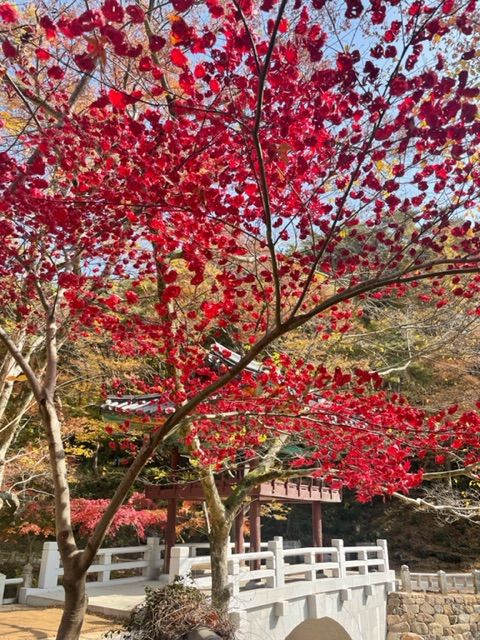
If you didn’t know already, I am originally from South Korea. This week, I’m sending out this newsletter from Suncheon, a region in the south of the country where my parents now live. Being back here after many years got me thinking about the rise of Korea in people’s awareness. Perhaps you’ve heard of BTS, the seven-piece Korean boyband who’ve found unparalleled worldwide fame in recent years, or watched the Oscar-winning film, Parasite, or the gruesome Netflix series, Squid Game. K-beauty, K-pop, Kimchi. This boom in interest has been attributed to something known as Soft Power.
Soft Power
Joseph S. Nye Jr. coined the concept of ‘Soft Power’ in the 90s. “Soft power shuns the traditional foreign policy tools of carrot and stick, seeking instead to achieve influence by building networks, communicating compelling narratives,... and drawing on the resources that make a country naturally attractive to the world.” Ref: https://softpower30.com/what-is-soft-power/
The juxtaposition of these two words, ’ soft’ and ‘power’, interests me. How can something soft be powerful? The word itself has connotations of being weak, woolly, and maybe even a bit pathetic - not something you’d imagine could carry significant influence. But, compared to the more obvious authority wielded by hard power, less conspicuous forces hold considerable sway - enough to excite, move and motivate.
Soft skills
As a young doctor, I learnt that hard skills were prized above all else when training. Hard skills might be considered the extent of theoretical knowledge, years of experience, manual prowess and quick thinking. Soft skills might be the bedside manner, the demonstration of empathy and compassion, and intelligent communication. Of course, you need both - I may have the knowledge to suggest which pill you need and when, but without artful skill, how can I hope to influence whether or not you actually take your medicine or ever agree to come back to see me again at all? Soft skills are a prerequisite for any effective physician if they genuinely desire to help their patient; without them, hard skills (however impressive) can sometimes be redundant.
Hard or Soft?
I also see this juxtaposition appear in the soft and hard ways we practice Yoga. I tend to live and breathe Yoga-asana in concrete terms - emphasising anatomy, alignment and biomechanics in physical practice. For me, tried and tested models help to grasp body literacy, such that understanding and progress can be tangible and rewarding. Directive instructions and drills also come with their fair share of hardness - a simple case of listen, follow, repeat.
The soft stuff is harder to pin down in hands, hips or shoulders. How to manage one’s ego, practise surrender, cultivate evenness of mind and foster self-awareness. And similar to a young physician learning the soft skills of consulting, how to bring empathy and compassion to ourselves as we practise.
So what of this softer, less directive stuff - stuff which we can only know by choosing to enquire into ourselves? Could it be that intentionally tending to the inner landscape as much as the outer when we practice is super powerful; what, in fact, makes Yoga, Yoga?
Finding Balance
I often find myself resorting to comfortable patterns of hardness, doing the drills, and reacting to rewards and punishments in my physical practice (and in life, I might add). Sometimes, I find it easier to leave out the soft stuff altogether. I need to remind myself to give as much attention and respect to the inner landscape as the outer, and I don’t always find it easy.
The philosophical messages deeply engrained in Yoga imbue a deeper significance on what could otherwise stay a physical practice you could enjoy with a personal trainer. But, if you’re choosing to do Yoga, perhaps inherently, you already know the soft power Yoga offers - a heightened potency to a practice that touches well beyond the body.
Moving into November and December, I think we’ll work on Balance - what it means, how it feels. In both hard and soft terms.
Let’s practise and explore.
Chang Park | NOV 3, 2022
Share this blog post
 OfferingTree