Rethinking Heartsink
Chang Park | NOV 15, 2024
Rethinking Heartsink
Chang Park | NOV 15, 2024

That Sinking Feeling
Have you ever heard the term "Heartsink"? It's a word we medics use to describe our most challenging patients—those who evoke deflation and dread when we think of them or see them in the clinic. These individuals might include perpetual victims, filibusters, and manipulators. They often are frequent attendees with endless complaints about things that never seem to get better—symptoms, their neighbours, and us.
One way to cope with these ‘difficult’ patients is to vent with colleagues in the coffee room, commiserating with each other about our respective Heartsinks. While this provides temporary relief, it doesn’t prevent them from reappearing, causing stress at the mere sight of their name on a computer screen.
Lately, I’ve been thinking about my Heartsinks as I prepare to go on sabbatical in January. Surprisingly, I'm actually going to miss them.
...It was not always thus. My unusual fondness for these patients is a testament to one of the best pieces of advice I have ever received whilst practising Medicine.
The Heart of Healing
Why was it even necessary to change my approach to Heartsinks? Well, avoiding them, moaning about them, or wishing them away wasn’t helpful to me in the long run. Each interaction led to growing resentment and irritation. The repeated bad feelings towards these folk made me feel terrible, and I also realised that my curiosity, understanding, and effectiveness as a doctor were hugely diminished.
When it came to Heartsinks, I began to realise that compassion was absent when perhaps it was most needed.
Despite knowing that wishing our patients well is an obvious prerequisite for care, I’m always surprised by how compassion can be whittled away in the caring professions and within me. Paradoxically, working in healthcare can drain any goodwill you once held to be replaced with cynicism and judgment.
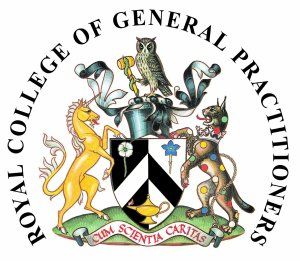
The coat of arms for the Royal College of General Practitioners represents some of the qualities expected of the family doctor. There are some lovely details, such as the owl for wisdom, the white poppy of analgesia, and the spotty lynx symbolising the all-seeing nature of the generalist. These symbols are underpinned by the inscription underneath, “Cum Scientia Caritas”, translating to “Science with Heart/Compassion”.
The power of compassion certainly belongs here in the armoury of healing, where sincerity and well-meaning lend themselves to the therapeutic relationship like magic, and doctors can accentuate the potency of their prescription or even become the medicine themselves.
Rethinking Heartsink
It’s humbling to me that, in the fullness of time, Heartsinks were the ones who taught me this most valuable lesson.
So then, to this enlightened advice that got me rethinking Heartsink:
When compassion is lost, it must again be found.
I can't recall who initially shared this advice with me, but they knew the score. They encouraged me not to avoid these inevitable interactions but to lean in, smiling. I was to move toward the subjects of my discomfort with an open heart and learn even how to love the most challenging of Heartsinks. I was told that for this to work, I must convince myself that my most dreaded patient was the one I looked forward to seeing the most, lending them the most unconditional compassion I could muster.
Sound a bit crazy? Difficult? Unnecessarily self-flagellating? Some of my colleagues think so whenever I share and endorse this tip. They look at me as if I've gone doolally - they believe the yoga’s gone to my head - which perhaps it has 😉
But this process isn’t as bonkers as it may seem. Making a counterintuitive shift in attitude was difficult but a revelation, and I still urge my fellow doctors to try it out.
Remember Compassion
As it happens, there's a fantastic meditation that is perfect for this. You might have come across it in a yoga class, as I first did—the loving-kindness meditation based on the Buddhist practice of Metta Bhavana.
There are many versions of how this can run. Here's an example of a rough outline:
Step 1: Start by settling and centring yourself in a comfortable position. You now spend time extending compassion toward yourself. You can silently recite a script like this: “May I be happy. May I be healthy. May I be safe from inner and outer harm.”
Step 2: Then, think about someone you love and adore. As they come to mind, the sensation of warmth and care in your heart should come naturally as you extend well-wishes towards them. You direct the recitation to them, “May you be happy…”
Step 3: Next, think about someone neutral. Repeat the exercise and recitation as above.
Step 4: Then, think about someone you dislike or find challenging. Repeat the exercise, noting any resistance or difficulty.
Step 5: Finally, encompass yourself and everyone else in your field of awareness, extending compassion to all, “May we all be happy…”
It’s a wonderful guided practice. If you’ve never heard of it, I’d encourage you to try it, especially if you feel your heart ever sinking. If you want to follow a guided one, I like this short 10-minute one I found on YouTube: https://www.youtube.com/watch?v=Gs5pxCkahqM
Be Still, My Sinking Heart
Compassion, in its simplest form, appears not to discriminate - for friend, foe or yourself; it emanates from the very same source. Applying this balm, our hearts need not sink so much but rather open up and, in so doing, help to soothe ourselves and others.
Whenever I've stopped to practise Metta, I remember that compassion and kindness are choices. We choose to extend them to those we like as much as we withhold them from those we dislike. By opening one's arms into a figurative embrace, it is possible to appreciate and think fondly not only those you easily love and adore but those with whom you have nothing in common, whose values and behaviours you may oppose, and to put it lightly, rub you up the wrong way.
Heartsink is not only felt between a doctor and a patient. It seems to me that from one person to another, the death of compassion seeds the dread and fear of others, which we can all experience as a kind of Heart Sink.
Who in your vicinity could give you a challenge and opportunity to practise compassion and loving-kindness?
Perhaps in time, we could even be grateful to them for how they teach us to love.
Let’s practise.
Chang Park | NOV 15, 2024
Share this blog post
 OfferingTree