Forward Folder Vs Back Bender
Chang Park | JUL 6, 2023
Forward Folder Vs Back Bender
Chang Park | JUL 6, 2023
During a class, one of my teachers posed a question, which I’ve since been thinking about:
“Are you a natural forward folder or a natural back bender?”
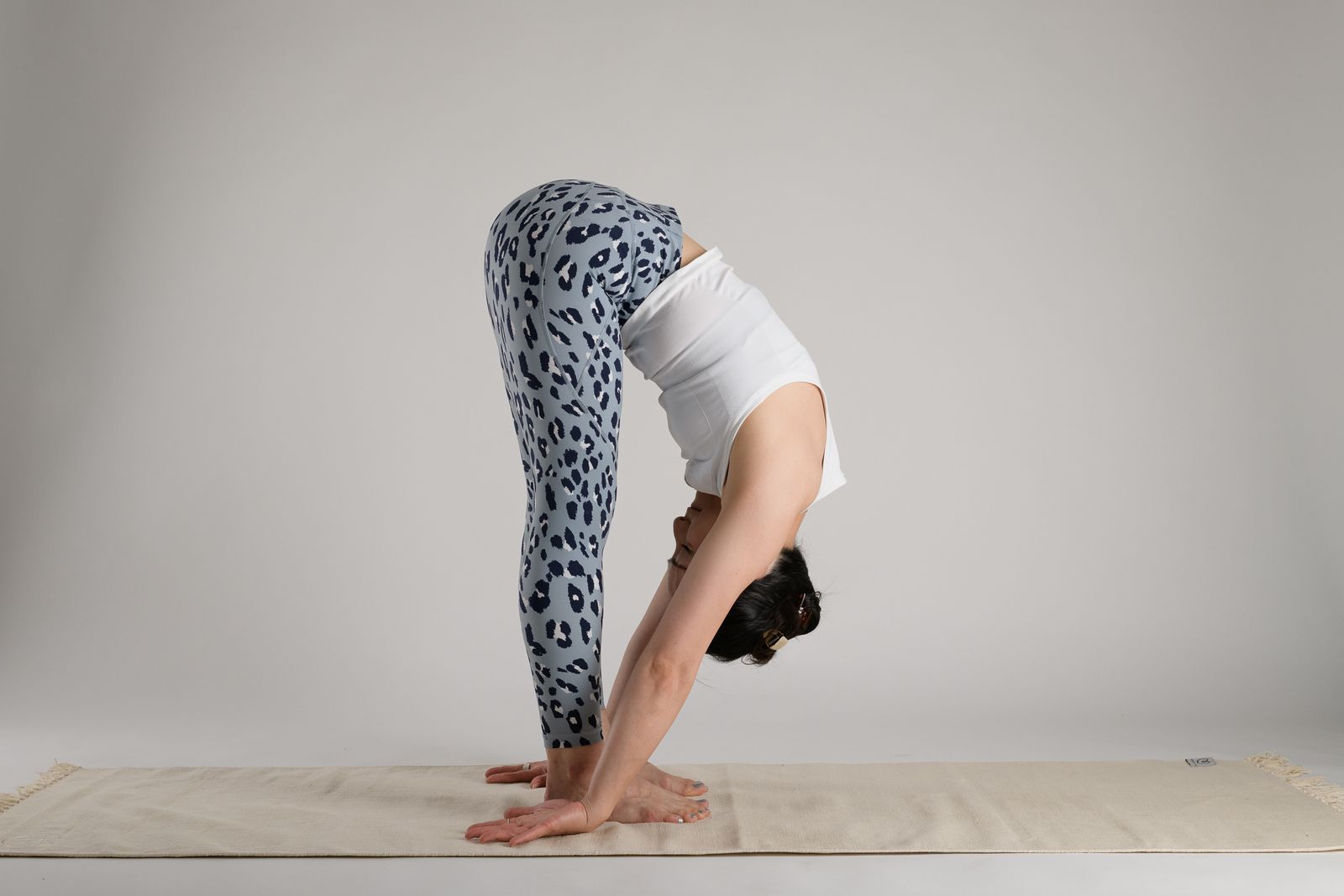
I’ll tell you what my immediate thought was - neither! I’m not sure I’d call myself a ‘natural’ anything! But, if pressed, I might come to a reasonable conclusion: natural back bender. Not necessarily because I find backbends easy but because I’ve long found forward folds extremely challenging. I always seem to be the first one lifting their head out of a long Uttanasa (standing forward fold) or Prasarita Padottanasana (wide-legged forward fold) with a groan.
How about you - do you prefer a forward fold or a back bend? One or the other, both equally or neither? What would be your first answer to this question?
You Know, Those Annoying People
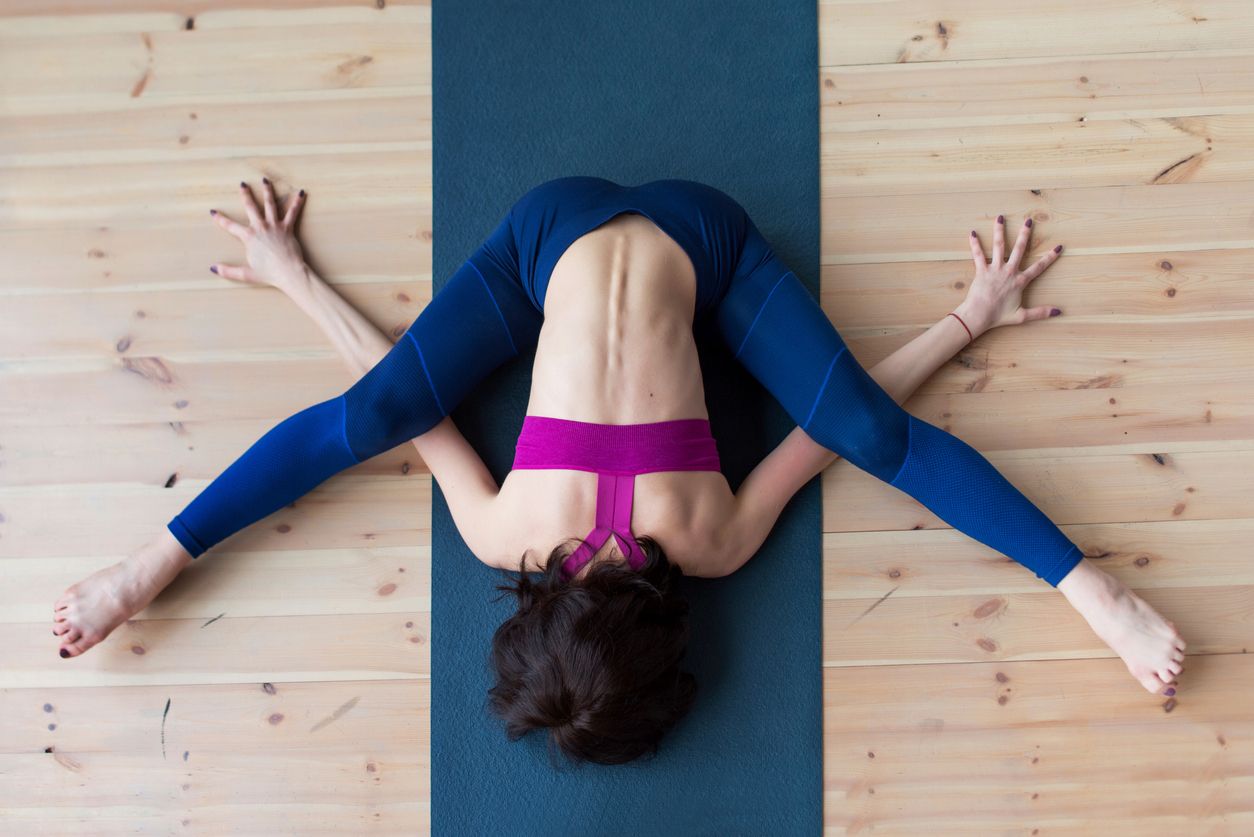
I remember a time when I went on my first yoga retreat. The sister of a fellow retreat-goer (who wasn’t there for the yoga) joined a class midweek for fun - her first-ever yoga foray. We were all amazed as she flopped effortlessly into a beautiful Kurmasana (tortoise pose) - a deep-seated forward fold so low that your upper arms neatly slide under your legs. The woman had never done a day of yoga in her life.
A natural forward folder if ever I saw one. It was fantastically annoying, to say the least!
Unique Constitution
We could acknowledge that our genetic makeup, including sex, age and ethnicity, as well as the unique anatomy of our joints and innate tissue elasticity, might give us an individual advantage or disadvantage when it comes to making specific yoga shapes, much like Miss Kurmasana above (we really shouldn’t hold it against her).
I joke that I’m not a natural anything. Still, I realise that simply by being a woman, I may have a slight advantage in flexibility over my male counterparts (generally speaking). Maybe it partly explains why more women are drawn to yoga.
However, it's not important whether we can easily make shapes or not. The crucial question is what we do with our natural tendencies once we recognise them.
Nature vs Nurture
Natural abilities aren’t everything. Take this mobile novice who glided into Kurmasana without breaking a sweat. Whilst she may have an inborn flexibility and anatomy that could be covetable on a surface level, she may face unseen challenges like weakness, pain, and joint instability.
She has plenty of work to do. The type of nurture to apply to her particular nature might be to build resistance, develop muscle strength and limit the ego (a difficult thing indeed) and not allow flexibility alone to take her into the depth of a pose. Perhaps her work is, in fact, to do less yoga asana, or at least do it very mindfully.
For others in the opposite camp (the stiffies among us), the nurture we apply might be to loosen and breathe into tight tissue without overstretching and to do so without frustration or comparison. To practice with enough consistency that softness and length become part of the new vocabulary of the body, which it invariably does.
Practice = Nuture
Am I a natural forward folder or a natural back bender? This question has come back to me in recent practice, and I’m now I’m not so sure about the actual answer. Amazingly, I’ve started to enjoy forward folds for the first time in a decade. Stopped avoiding them even. I seek them out and stay in them longer, my goodness. And back bending has become more challenging. What has happened to this ‘natural back bender’ with an aversion to forward folds?
I shouldn’t be surprised. I’ve always believed that the nurture we apply to our personal nature is the much more critical piece for our ultimate direction of travel. This is the beauty of practice, AKA nurture. Whatever equipment you happen to be working with, with application, the body and mind can mould radically in your chosen direction. Or might I suggest in yogic terms - move you gently towards your true nature, your natural state.
This nurture can change us so much that what we once experienced as wholly unnatural becomes perfectly natural, and vice versa. Then, you begin to wonder what your ‘natural state’ really was in the first place. Is it natural to sit in a chair for eight hours a day for decades, then declare that you’ve ‘naturally’ stiff hamstrings, a bad back and can’t do forward folds? I’m not so sure.
Back and Forth
Instead of asking whether we are natural forward folders or back benders, we might consider why we find certain poses easier at this moment and where our starting point is.
Do you know your natural tendencies, where your starting point is, what you wish to modify and why? And how then to change the modifiable, decide when to gravitate to what’s easeful (go with the flow), lean into what’s challenging (cultivate the opposite), and choose the doses of each intelligently. Isn’t this learning the work of yoga: awareness, discipline, and discrimination?
So if I were to answer this question again after some consideration, I’d like to change my mind. I’m neither a natural forward folder nor a natural back bender; I’m surely both. For my and every body has an untapped capability, a natural state to be mined and discovered.
Back and forth we go in yoga, don’t we? Moving the spine in all directions, as it is so well designed to do.
So what have I decided that we’ll focus on this week? You guessed it... forward folds.
Let’s practise.
Chang Park | JUL 6, 2023
Share this blog post
 OfferingTree