Close Your Eyes
Chang Park | JUN 29, 2023
Close Your Eyes
Chang Park | JUN 29, 2023
Earlier this week, I woke up and felt inexplicably tired. But I really wanted to join a yoga class. So I signed up for one and pushed through. The discomfort didn’t pass; moving was painful, so halfway through, I had to lie down, close my eyes and recover. Only when I stopped did I realise how awful I felt and had to go to bed for the rest of the day, a raging fever following shortly after. I was cross with myself - why is it that my mind always puts my ego before what the body tells me?
All By Themselves
If you don’t slow down occasionally, an illness will enforce it. I felt grateful as my eyes closed all by themselves as I rested. It’s a funny phenomenon, isn’t it? The body auto-shutting down from the outside world. As if to say, “It’s time to stop worrying about what’s out there and focus on what’s in here. Why don’t you stop for a blinking minute?!”
It got me thinking about how the eyes work in Asana, how they can help and hinder us and what we tend to do with our eyes as we practice. These days, I enjoy closing my eyes in almost every posture as if my body is craving introspection. Is it just me?
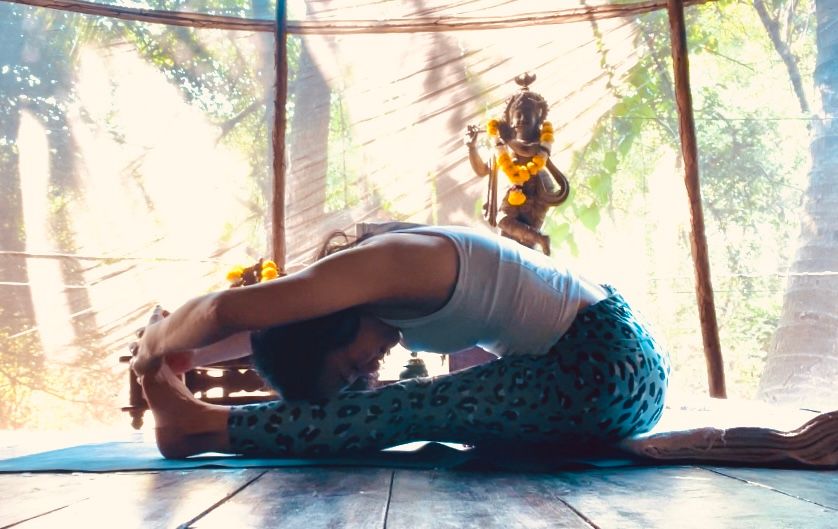
To say I like to close my eyes in my Asana practice is not entirely accurate - they tend to close all by themselves. I suspect there must be some automatic thing that happens, especially when we fold forwards. The release of the head, typically assisted by gravity, must signal something to the body that it’s time to dial inwards, become a little quieter and return to ground.
Get rid of the Mirror
It’s easy to get caught up in the visual world around us, with its colours and enticing shapes. Today, we are constantly bombarded with stimulation, making it nearly impossible to avoid. However, taking a moment to withdraw from these external distractions can be beneficial. In yoga, it may be helpful to watch a teacher’s movements at first in order to learn proper alignment. However, as you become more familiar with the poses, removing the visual distractions can deepen your experience and increase your sensitivity to your body. (This is why I don’t like mirrors in studios!)
Without the visual emphasis on achieving a certain pose, you can focus on your inner experience and notice how your body feels - in each pose and each passing moment, with every adjustment and every breath. Isn’t this meditation in motion?
Eye Movements
That’s not to say the eyes aren’t useful!
Interestingly, the small eye movements are intricately involved with how we hold our heads in space. Eye movements are connected to the stabilising muscles at the back of our necks which help us direct our gaze quickly and accurately. Important in stability, mobility, balance and survival.
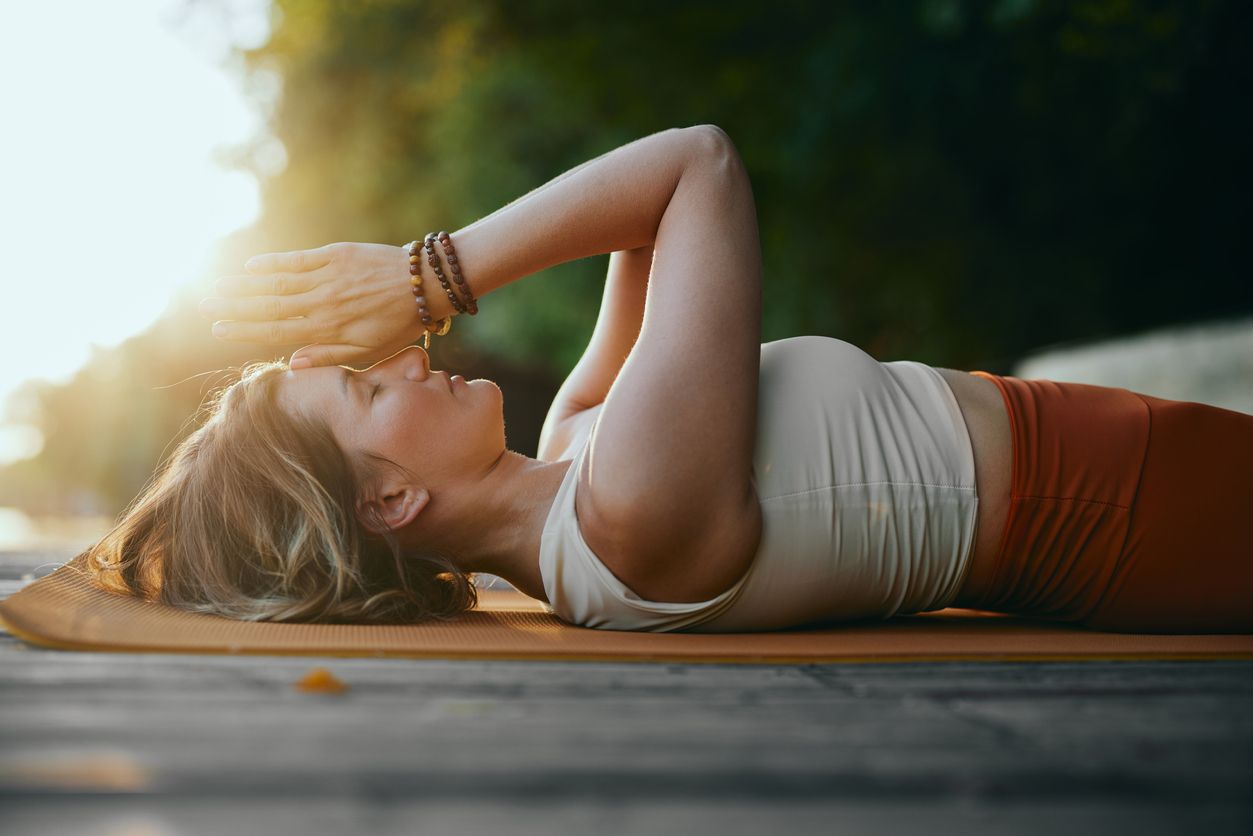
Eyes work when the poses demand more of us, enabling us to stay alert and energised when needed, perhaps even bulging with the effort. In a stamina-testing back arch, a standing pose or a vigorous twist, the eyes seem to be earnestly trying to assist. But softening the eyes, like steadying the breath, can help the nervous system cope with the challenge. Have you tried closing your eyelids once you’re at the depth of a deep back arch? It feels counter-intuitive at first, but somehow utterly delicious.
Windows to the Soul
Can we imagine the body has not only two eyes that look forward but eyes everywhere to help us receive and perceive? Imagine if we had eyes at the back of the head, for example, or even in the groins or armpits!
You may have heard of the Third Eye or the Anja Chakra, located just above the space between the eyebrows. This energetic space is associated with clarity, intuition, clairvoyance and perception beyond the straightforward visual perception we get through our two physical eyes - the sixth sense.
Eyes thus become a metaphor for perception; our real eyes, of course, help us to see but consider how they stop us from seeing too. Which other eyes can open when the two obvious ones are closed? During your next practice, notice what your eyes are doing. Close or soften them occasionally if they don’t automatically do so, and feel. And sense your perception of yourself and the world when arising from Savasana.
Let’s practise.
Chang Park | JUN 29, 2023
Share this blog post
 OfferingTree