Balancing Act
Chang Park | DEC 8, 2023
Balancing Act
Chang Park | DEC 8, 2023
Dizzy-Making
This week, I cycled through Hyde Park and passed the annual Winter Wonderland. The big looping rollercoaster caught my eye, but just looking at it made me slightly sick. Fairground rides are probably a thing of my past, as I sometimes suffer from a slight balance problem.
A few years ago, I developed an episode of vertigo, which I self-diagnosed as BPPV - Benign Paroxysmal Positional Vertigo. It’s a condition that tends to affect middle-aged women (I got my first attack when I turned 40 - joy). It’s an unpleasant thing that stops you from moving your head or standing up.
When a friend came to me after experiencing a similar episode, I tried to describe what was happening. It’s a slightly extraordinary explanation: “We have these semicircular canals inside the inner ear that are part of our balance (vestibular) system, helping us orientate ourselves with gravity. Some crystals sit at the bed of these fluid-filled canals; they sometimes get dislodged and enter the wrong canal. Now, if I can move your head a bit, let’s see if we can move them back…”
Balance is a Balance Of…
Luckily for me and my friend, BPPV is usually a short-lived phenomenon that can easily be corrected.
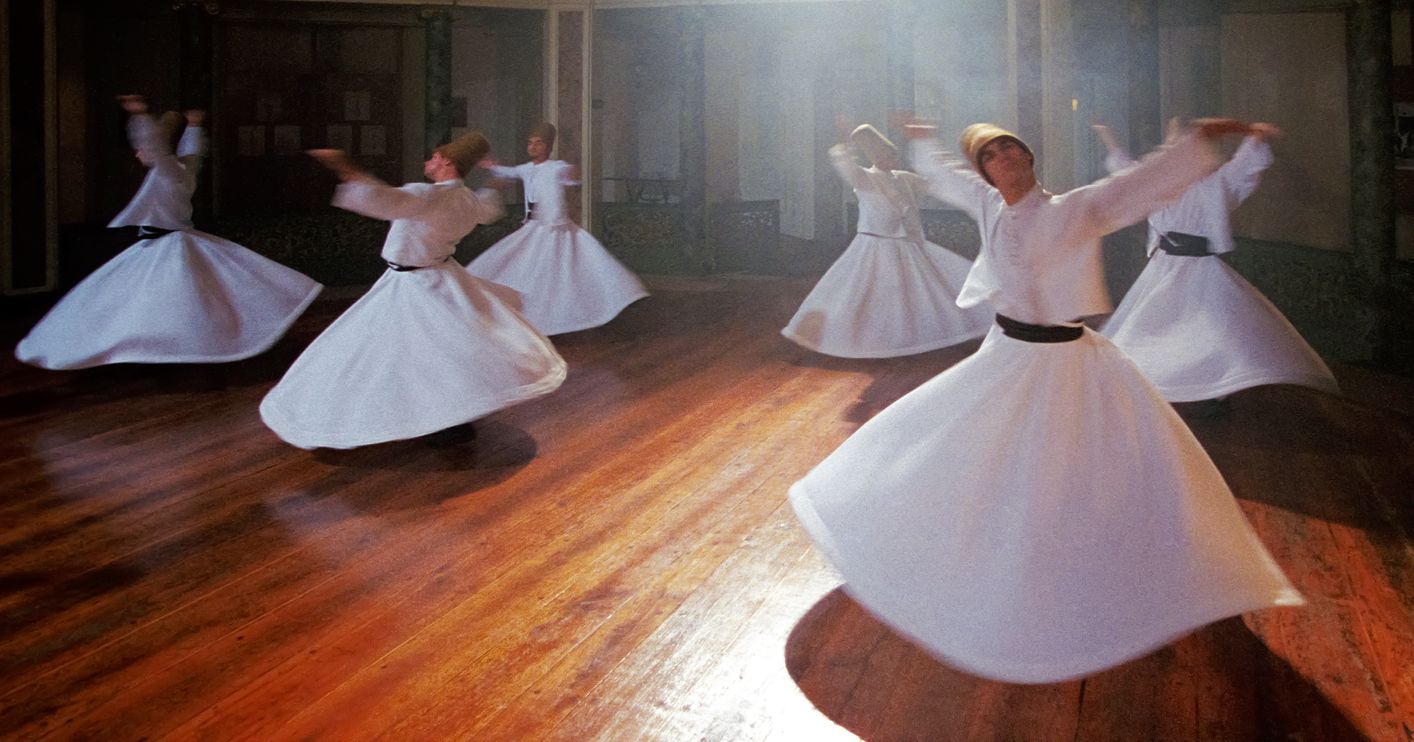
The remarkable thing about the human body is that a lot of it can be trained, rehabilitated and optimised. Have you ever seen the mesmeric Whirling Dervishes who spin endlessly with tilted heads? It’s hard to imagine how they don’t get dizzy and collapse. I’m unsure if I could endure the physical and spiritual training required to accomplish such vestibular stability.
Fortunately, the ability to maintain balance is not solely dependent on the intricate mechanisms of the inner ear. There is a collaborative effort between three inputs: approximately 70% vision, 15% vestibular (the aforementioned inner ear apparatus), and 15% proprioception. These peripheral signals are received and interpreted by the brain, which then coordinates the use of our muscles and gaze to keep us upright, usually automatically.
Your body - as usual, flipping incredible.
Now, having told you a little about my dodgy inner ear, I won’t go into further detail about the deficiencies in my vision, which has always been terrible 🥸. Parking these personal shortcomings of the ears and eyes brings me to the third and most interesting saviour of this balancing act - proprioception.
Where Am I?
Proprioception is the ability to know where your body parts are located in space. It’s the thing that allows you to know where to place your foot upon a step or raise your hand to your mouth to eat that second mince pie (oh so elegantly, mind). This ability is made possible by receptors from the skin, soft tissues and nerves. It lends us a kind of body awareness which lets us experience our physicality and our relationship to the external world.
Proprioception helps us adjust quickly to uneven ground, allowing us to stabilise and avoid falling, hence another crucial aspect of balancing. Just as the Whirling Dervishes can learn to strengthen their inner ear balance apparatus through training, our proprioceptive ability can be improved with practice.
Training is essential, as the loss of balance over time isn’t something you can fix with a pill. Poor balance has long been associated with poorer health outcomes. A 10-year study of over 1700 middle-aged people published in the British Journal of Sports Medicine (Araujo et al. 2022) associated an inability to balance (measuring standing on one leg for 10 seconds) with an almost doubled increased risk of death. A WHO estimate says that nearly 700,000 falls each year are fatal, making falling the second leading cause of unintentional injury death, with many more left with disability.

Art of Balancing
So, it appears we need proprioception to balance. But neatly enough, balance exercises also help us enhance our proprioceptive ability. Yoga asana incorporates effortlessly proprioception training using various balancing postures whilst simultaneously improving strength and coordination.
Apart from appreciating how beautifully balancing mechanics come together and the paramount importance of training the peripheral inputs to keep stable and injury-free, there are more reasons to practise balancing. Let us not forget our coordinating brains in this steady concert and how it, too, has a wonderful chance to develop. As important as the information we receive from the external world is the internal world we create as we intend to balance.
A balancing posture allows us to engage with our task fully; we require complete focus when standing on one leg, our hands, or our head. In a room full of students practising yoga, you can almost touch the concentration in the air as they begin their balance, and a sense of quiet clarity emerges once the posture is released.
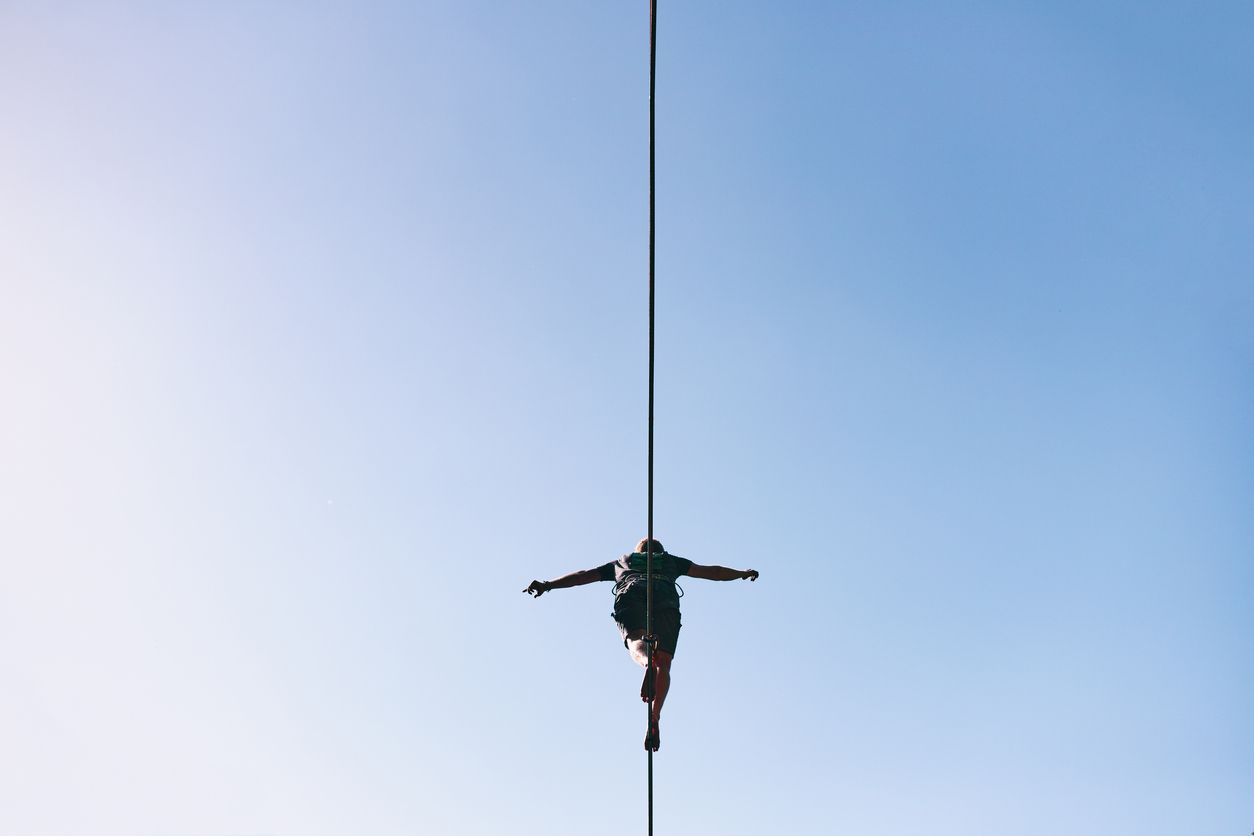
With practice and repetition, awareness is present and alive; balancing becomes a personal journey on the fine wire between effort and effortlessness, strength and softness, movement and stillness. We learn patience when we fall, grace to reach for support, and the determination to try again. Beautiful.
Let’s practise.
Chang Park | DEC 8, 2023
Share this blog post
 OfferingTree